What is Juicing?
 Today, juicing is more popular than ever. Juice bars are popping up in greater numbers and the amount of people who make their own fresh juice at home is increasing every year. I believe this rise in popularity can be attributed to a general growth in humanity towards health and well-being, as people find more ways to improve the quality of their lives. Advocates of juicing such as the late and surely missed Jack LaLanne, and the present Cherie Calbom ‘The Juice Lady’ have also played a large part in promoting the power of juicing for health and vitality and combating illness.
What is juicing?
To cut a long story short, juicing is a process that extracts the juice from the pulp of fruits and vegetables. Juicing (or ‘juicin’) is also a term used for people who take steroids, but that is not the type of juicing we are talking about here! Mostly people use electric juice extractors at home for making juice easily, but there are also industrial manually operated machines that you will often see at juice bars, especially for making orange juice.
Fresh Juice Vs Commercial Juice
It is important to point out that there is a big difference between the nutritional quality of fresh made juice and commercial juice that we see at the store. Commercial juice is significantly inferior. It is heat treated, filtered and pasteurized, processes that destroy antioxidants, vitamins and beneficial enzymes. In addition to this they often feature added sugars, colorings and preservatives – all things that are counter-productive to health. This processing also tends to increase the acidity of the juice. Some people find that while a glass of store-bought orange juice can bring about an episode of heartburn, a glass of fresh made orange juice delivers no such adverse effects (I am one of them).
So while the health benefits of fresh juice are extensive, the benefits of commercial juice are brought into question.
Benefits of Juicing
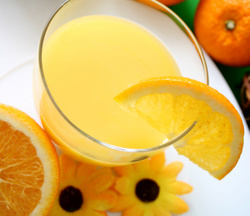 What is unique about fresh juices are the sheer levels of nutrients that they supply and the easily digested liquid format that they come in. It is as close to injecting nutrients directly into your veins as you can get without the needles! For example, a glass of carrot juice for one person requires about 8 – 10 carrots to make, a lot more than we would eat in one sitting, or in one day for that matter. And the vast amount of nutrients supplied by this juice require almost no digestion, they are more or less absorbed straight across the gut wall into the bloodstream. If we take into account that many people have under optimal digestive abilities as a result of eating less not so great foods, juicing really helps to deliver nutrients throughout the body that we may otherwise be deficient or sub-par in.
We can’t talk about the health benefits of juicing without talking about antioxidants. Fresh juice stands tall when it comes to antioxidant content and here’s why. Antioxidants are bound to the fibers in fruits and vegetables and when we eat them we can only release so many of them for digestion. However, a juice extractor breaks down the fibers extensively to release an abundance of these otherwise inaccessible antioxidants. If we couple this fact with the fact that we need to use at least a few pieces of fruits or vegetables to make one juice, we can see just how antioxidant rich a fresh juice is! A high intake of antioxidants is associated with less incidence of cancer, helps combat inflammation, slows down the aging process and helps protect us against heart disease and its related disorders like high blood pressure and atherosclerosis.
To get started with the health benefits of juicing today check out our article that clearly explains how to buy the right juice extractor for you – click here.
To your health
Darren Haynes


July 29th, 2011 at 11:22 am
I am hearing a lot of cons about discarding the pulp. Can you help with this? What about the sugar rush from juices? Also: Is it better to eat the whole fruit and vegetable or juice them? I realize that I cannot eat enough of either to satisfy my vitamin requirement, but it seems that discarding all the pulp (food) is not good either.
Thanks for any feedback.
Joy
August 3rd, 2011 at 2:36 am
Hi Joy,
those are some good questions. One of the cons of fruits juice is that it is a bit sugary. Fruits are naturally sugar but they also contain insoluble fiber that slows down the rate at which these sugars are released into the bloodstream. With juicing the insoluble fibers are discarded so they are not there to slow down the rate at which we absorb sugar into the bloodstream. Additionally we tend to juice several pieces of fruits at a time to make a single serving of juice, so we increase the amount of sugars we consume also by virtue of volume. SO this is something we have to consider when drinking fruit juice. This is why I recommend juicing vegetables at least 80% of the time because they contain much less sugar.
On the upside, we do get a lot more nutrition from fruit juice (with the exception of insoluble fiber) because a juice extractor breaks down the fibers extensively to release more antioxidants for us to digest. Antioxidants are bound to these fibers, and we don’t release as many for digestion by chewing fruits (or vegetables). So the true benefit of juicing is really the sheer volume of vitamins, minerals, enzymes and antioxidants they provide us with, more than we could possibly eat.
The question about whether it is best to juice or eat fruits or vegetables, is one that comes up a lot. The answer is – do both! It is important to eat fruits and vegetables for the fiber they contain, but juice increases the amount of nutrients we absorb (dramatically) and this really helps with detoxification, limiting oxidation, disease prevention, boosting the immune system, boosting vitality, and nourishing the whole body.
Darren